Views: 0 Author: Site Editor Publish Time: 2026-03-23 Origin: Site


Moving heavy loads safely across a warehouse floor requires the right equipment. When you manage inventory, logistics, or factory operations, you need to know exactly what your machinery can handle. One of the most common questions managers ask when upgrading their fleet is about vertical reach. Knowing the exact vertical limits of your equipment prevents workplace accidents and keeps your supply chain running smoothly.
A standard pallet truck is primarily designed for horizontal transportation rather than vertical stacking. Its main job is to raise a loaded wooden or plastic pallet just high enough off the ground to roll it easily from one side of a facility to another. However, the exact lifting height depends entirely on the specific type of equipment you are using. Different models serve completely different operational needs.
If you are planning a warehouse layout or purchasing new equipment, understanding these specifications is critical. This guide explains the lifting capabilities of various models, the importance of weight capacities like the popular 2.0T Pallet Truck, and how to source reliable equipment from a trusted pallet truck factory.
Most manual and electric pallet jacks share a similar baseline design. Their primary goal is ground-level transport. To achieve this, the forks rest very close to the floor, allowing them to slide easily under standard pallets.
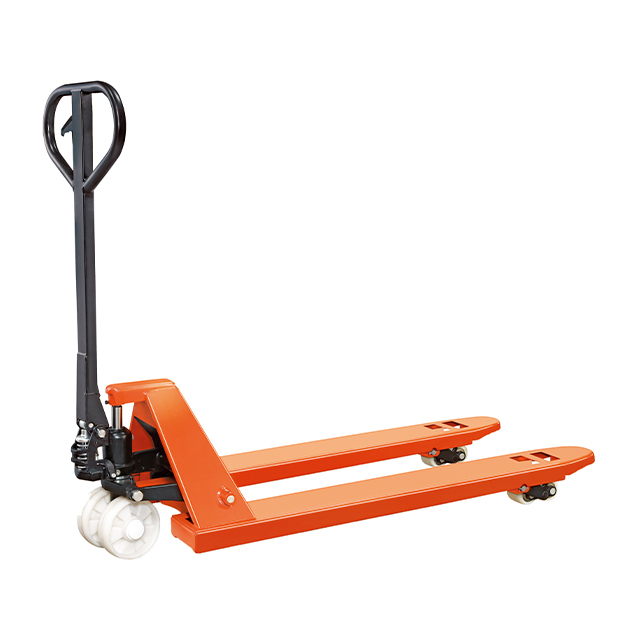
The traditional hand-pump model is the most common sight in retail stockrooms and small warehouses. When fully lowered, the forks sit about 3 to 3.5 inches off the ground. Once the operator pumps the handle, the hydraulic system engages. At maximum extension, a standard manual pallet truck lifts the load to about 7.5 to 8 inches off the floor.
This roughly 5-inch vertical clearance provides plenty of room to clear uneven concrete floors, small bumps, and standard warehouse debris. It is not designed to load trucks or place goods onto shelves. Instead, it serves as the perfect tool for moving items between staging areas and storage bays.
Electric models follow a very similar vertical profile. Because their main function is still horizontal movement, they also lift loads to a maximum height of around 8 inches. The main advantage of an electric model is not vertical reach, but horizontal efficiency. Battery-powered motors propel the unit forward and handle the lifting mechanism, saving the operator from physical strain.

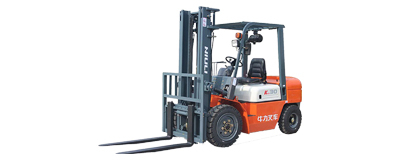
When your operations require you to elevate goods beyond ground clearance, you have to look beyond the standard pallet truck. Several specialized models bridge the gap between a basic jack and a full-sized forklift.
Scissor lift models offer a significant upgrade in vertical reach. These units function like a standard manual jack but feature a distinct scissor mechanism beneath the forks. When engaged, this mechanism extends upward.
A typical scissor lift pallet truck can elevate a load to approximately 31 inches (about 800 millimeters) off the ground. This specific height is incredibly useful for ergonomic work positioning. If your workers need to manually sort boxes from a pallet to a conveyor belt or workbench, the scissor lift raises the pallet to waist height. This prevents repetitive bending and reduces the risk of back injuries.
If you need to place goods onto warehouse racking, you must use a pallet stacker. While technically a different category of equipment, stackers are the natural next step up from a standard pallet truck. Stackers feature a vertical mast, similar to a forklift.
Depending on the specific model and mast configuration, manual and electric stackers can lift pallets anywhere from 60 inches to over 150 inches into the air. This allows operators to load trucks directly from the ground or place inventory onto second and third-tier warehouse racks.
Lifting height is only one half of the equation. You must also consider the maximum weight limit. As you lift heavier items higher into the air, the center of gravity shifts, and stability becomes a crucial safety factor.
One of the most widely used sizes in the logistics industry is the 2.0T Pallet Truck. The "2.0T" designation means the equipment can safely lift and transport up to 2.0 tons, or 2,000 kilograms. This capacity easily handles standard industrial loads, large shipments of consumer goods, and heavy raw materials.
When operating high-lift equipment, you must pay close attention to the load chart. A stacker might be able to lift 2,000 kilograms to a height of 3 feet, but its safe lifting capacity often decreases as the forks reach their maximum vertical extension. Always train operators to read and understand these safety limits.


The durability of your warehouse equipment directly impacts your daily productivity. A broken hydraulic pump or a cracked fork can bring operations to a standstill. That is why it is essential to purchase your equipment directly from a reputable pallet truck factory.
For example, NIULI Machinery Manufacture Co., Ltd is a leading global manufacturer of material handling equipment. Based in Heshan City, Guangdong Province, China, NIULI operates a massive 330,000-square-meter facility. They produce a comprehensive range of equipment, including standard hand pallet trucks, lithium battery electric models, and high-reach pallet stackers.
By sourcing from an established pallet truck factory like NIULI, you guarantee that your equipment has passed rigorous quality control tests. Reliable manufacturers hold certifications like ISO9001 and ensure their main products pass CE/GS certification. This gives facility managers peace of mind, knowing their equipment will safely handle heavy loads day after day.
No. While a 2.0T Pallet Truck has the weight capacity to lift a small car, it is extremely dangerous to try. Cars do not have a flat, stable base like a wooden pallet. The load would be unbalanced, posing a severe risk of the vehicle tipping off the narrow forks and causing injury or property damage.
The most common reason a hydraulic pump stops lifting is trapped air inside the system. You can usually fix this by bleeding the hydraulic fluid lines. Other potential causes include low hydraulic fluid levels, degraded O-rings, or a damaged release valve. Regular maintenance prevents most of these issues.
It depends entirely on your warehouse volume. Manual jacks are cost-effective, require very little maintenance, and are perfect for light to medium duty. Electric models reduce operator fatigue and move heavy goods much faster, making them ideal for high-volume, continuous operations.
Choosing the right equipment requires a clear understanding of your facility's daily demands. If you simply need to move inventory across a loading dock, a standard model lifting 8 inches will do the job perfectly. If you want to protect your workers from back strain on assembly lines, a 31-inch scissor lift is the smart choice. For high-level racking, you will need to invest in a dedicated stacker.
Take the time to assess your warehouse layout, the average weight of your shipments, and your long-term storage goals. Once you know exactly what you need, partner with a proven manufacturer to equip your team with reliable, safe, and efficient handling tools.