
Views: 0 Author: Site Editor Publish Time: 2026-03-09 Origin: Site


Whether you work in a warehouse, a retail stockroom, or a logistics facility, knowing how to operate a pallet truck correctly is one of the most important skills you can have. Done right, it speeds up material handling and keeps your team safe. Done wrong, it can lead to damaged goods, equipment breakdowns, or serious injuries.
This guide covers everything you need to know about operating both hand pallet trucks and electric pallet trucks—from pre-use inspections to best practices on the floor. If you're new to pallet trucks or looking to sharpen your technique, read on.
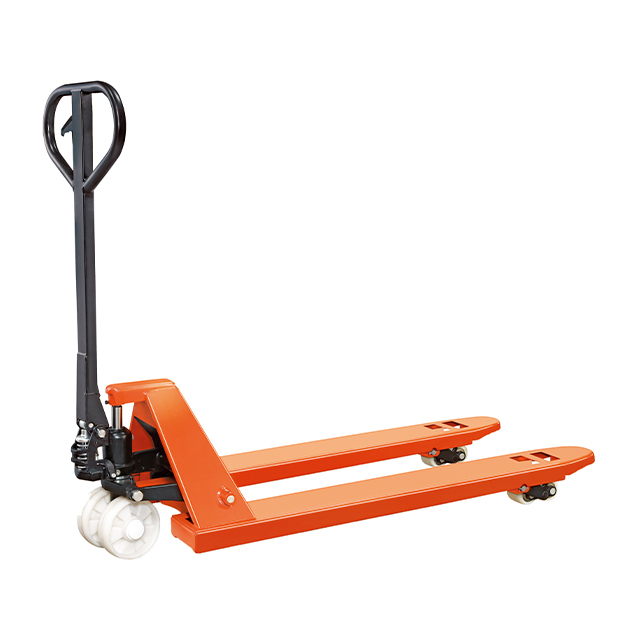
A pallet truck (also called a pallet jack) is a wheeled tool used to lift and transport palletized loads across flat surfaces. It slides two forks underneath a pallet, lifts it off the ground, and allows an operator to move it from one location to another.
There are two main types:
Type | How It Works | Best For |
|---|---|---|
Hand Pallet Truck | Operated manually using a pump handle | Short distances, lighter loads |
Electric Pallet Truck | Battery-powered motor for lifting and driving | Longer distances, heavier loads |
Each type has its own operating procedure, but the fundamentals of safe use apply to both.
Never skip the pre-operation inspection. A few minutes of checking can prevent hours of downtime—or worse, an accident on the floor.
Forks: Check for cracks, bends, or damage that could compromise load stability.
Wheels and rollers: Make sure they spin freely and show no signs of excessive wear.
Hydraulic system: Pump the handle a few times and confirm the forks rise and lower smoothly without leaking.
Handle: Check that the control lever moves easily between raise, neutral, and lower positions.
Battery charge: Confirm the battery is sufficiently charged before starting your shift.
Controls: Test the throttle, horn, and emergency stop button.
Forks and wheels: Same checks as the hand pallet truck apply here.
Cables and connections: Look for any frayed wires or loose connections.
If you find any defects, report them immediately and take the equipment out of service until it has been repaired.
A hand pallet truck is straightforward to use, but proper technique makes a big difference for both safety and efficiency.
Step 1: Position the forks
Approach the pallet slowly and align the forks with the pallet entry points. Slide the forks fully underneath the pallet so the load is evenly distributed across both forks.
Step 2: Raise the load
Set the handle control to the "raise" position and pump the handle up and down. The forks will rise with each pump. Lift the pallet just high enough to clear the floor—typically 5 to 10 cm. There's no need to lift it higher than necessary.
Step 3: Move the load
Pull the pallet truck toward you rather than pushing it. This gives you better visibility and more control. Keep the load low to the ground and walk at a steady, controlled pace.
Step 4: Lower and release
Once you reach your destination, set the handle to the "lower" position. The forks will descend slowly, placing the pallet back on the ground. Then carefully pull the forks out from under the pallet.

Electric pallet trucks handle the heavy lifting mechanically, but they require a more attentive approach due to their speed and power.
Step 1: Power on and inspect
Turn on the unit and check that all systems are functioning. Stand in the operator position and hold the handle firmly.
Step 2: Insert the forks
Drive slowly toward the pallet and guide the forks into position beneath it. Use slow, precise movements—electric pallet trucks are powerful and can cause damage if rushed.
Step 3: Raise the load
Use the lift control on the handle to raise the forks. As with the hand pallet truck, lift only as high as needed for clearance.
Step 4: Travel safely
Use the thumb throttle or drive control to move the truck. Keep your speed low in busy areas, sound the horn at blind corners, and always look in the direction of travel. Never allow passengers to ride on the truck.
Step 5: Lower and park
Lower the forks completely once you've positioned the load. After your shift, park the electric pallet truck in a designated area and leave it on charge.
Safe operation comes down to consistent habits. Here are the rules every operator should follow, regardless of which type of pallet truck they use:
Never exceed the load capacity. Check the rated capacity on the equipment label and stay within it.
Keep the load stable. Unevenly distributed or oversized loads increase the risk of tipping.
Avoid ramps and slopes where possible. If you must use an incline, always keep the load on the uphill side.
Wear appropriate footwear. Steel-capped boots protect your feet from dropped loads.
Keep bystanders clear. Establish a clear path before moving any load.
Never use damaged equipment. Report faults immediately—don't attempt to repair the truck yourself.
1
Choosing the right type of pallet truck for the job makes your work safer and more efficient. Here's a quick comparison to help guide that decision:
Factor | Hand Pallet Truck | Electric Pallet Truck |
|---|---|---|
Load capacity | Typically up to 2,500 kg | Up to 3,000 kg or more |
Distance | Short distances | Medium to long distances |
Operator effort | Manual pumping required | Minimal physical effort |
Speed | Slower | Faster |
Cost | Lower upfront cost | Higher upfront cost |
Maintenance | Simpler | Requires battery and motor care |
For occasional short-distance tasks, a hand pallet truck is usually sufficient. For repetitive, high-volume material handling, an electric pallet truck saves time and reduces operator fatigue significantly.
Hand pallet trucks generally don't require formal certification, but operators should complete site-specific safety training. Electric pallet trucks may require documented training or certification depending on local workplace regulations. Always check the requirements in your region.
Most standard hand pallet trucks have a load capacity of around 2,000–2,500 kg. Electric pallet trucks can often handle loads of up to 3,000 kg or more. Always refer to the specific model's rated capacity before loading.
Regular maintenance includes cleaning the forks and wheels, checking hydraulic fluid levels, lubricating moving parts, and inspecting for any structural damage. Electric pallet trucks also require regular battery maintenance and charging. Follow the manufacturer's maintenance schedule for best results.
Most standard pallet trucks are designed for smooth, flat indoor surfaces. Some heavy-duty models are built for outdoor use on rougher terrain. Always confirm a model's suitability for outdoor environments before using it outside.
If a hand pallet truck loses hydraulic pressure, stop operations and move the load to a safe location if possible. For electric pallet trucks, engage the emergency stop and follow your facility's equipment failure protocol. Do not attempt repairs without proper training.
Mastering pallet truck operation comes down to three things: preparation, technique, and consistent attention to safety. Take the time to inspect your equipment before each use, follow the correct operating steps, and always prioritize the safety of yourself and those around you.
If you're looking for high-quality hand pallet trucks or electric pallet trucks built for demanding environments, NIULI Machinery offers a comprehensive range of material handling equipment trusted in over 120 countries. Explore the full product range at chinaniuli.com.




 ELECTRIC PALLET TRUCK
  PALLET TRUCK SCALE
  AERIAL WORK PLATFORM
  DRUM TRUCK


