
Views: 0 Author: Site Editor Publish Time: 2026-02-24 Origin: Site


The pallet truck, also known as a pallet jack, is the unsung hero of the warehouse and logistics world. It is one of the most essential pieces of material handling equipment, designed to lift and move palletized goods efficiently.
While they are simple machines, using one correctly is vital for workplace safety and operational efficiency. Whether you are a new operator or looking to refresh your knowledge, this guide will walk you through the proper steps. Additionally, we will explore why choosing a reliable Pallet Truck Manufacturer, such as a leading China Pallet truck supplier, ensures you have the best equipment for the job.
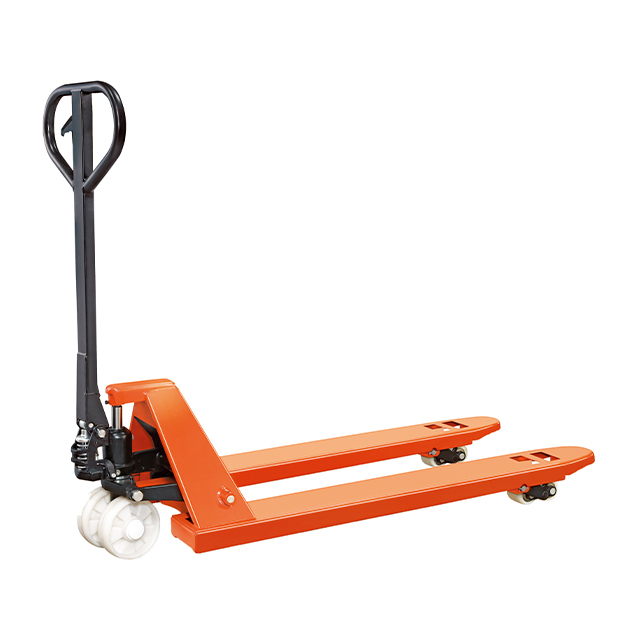
Before diving into the "how-to," it is important to understand the machine. A pallet truck consists of a set of forks (usually made of steel) that slide under a pallet, a hydraulic pump, and a steering handle. The primary mechanism involves a hydraulic system that lifts the pallet just high enough off the ground—typically a few inches—so it can be moved manually.
Safety always comes first. Before using any pallet truck, perform a quick visual inspection:
Check the Wheels: Look for any debris, wear and tear, or damage.
Inspect the Forks: Ensure they are not cracked or bent.
Test the Hydraulics: Pump the handle to see if the forks rise smoothly.
Check the Handle: Ensure the trigger and lowering lever are functioning correctly.
If you are sourcing equipment from a reputable China Pallet truck manufacturer, you can expect high-grade steel and reliable hydraulics, but daily checks are still a must.
Approach the pallet squarely. The pallet must be aligned so that the forks can slide in easily.
Pump the handle slightly to raise the forks to the correct entry height.
Slide the forks into the pallet until they are fully inserted. The pallet should be centered on the forks to ensure stability.
Once the forks are fully under the pallet, pump the handle up and down. This activates the hydraulic pump, pushing oil into the cylinder and raising the forks.
Continue pumping until the pallet clears the ground by about 2 to 4 inches. Never lift the load higher than necessary, as a high center of gravity can cause tipping.
Tilt the handle down to a comfortable pulling position.
Walk forward, pulling the load behind you. Always maintain a clear view of your path. Look out for ramps, uneven floors, or other personnel.
If you need to move the pallet truck down a slope, keep the load on the downhill side and control the speed using the handle. Never let go of the handle on an incline.
When you have reached the desired location, ensure the area is clear.
Gently pull the lowering lever on the handle. This releases the hydraulic pressure.
The forks will slowly descend, placing the pallet on the floor.
Once the pallet is stable, slide the forks out by pulling the pallet truck back.


Overloading: Every pallet truck has a weight capacity (often 2,200 kg to 5,000 kg). Check the specifications provided by your Pallet Truck Manufacturer and never exceed the limit.
Riding the Pallet Truck: Never ride on a manual pallet truck. It is not designed for transportation of personnel.
Pushing with Forks Lowered: Dragging the forks on the ground while loaded causes rapid wear. Always keep the load slightly raised while moving.
1
When purchasing equipment for your business, the quality of the pallet truck is just as important as the operator's skill. China has emerged as a global leader in the production of material handling equipment. Choosing a professional China Pallet truck manufacturer offers several distinct advantages:
Chinese manufacturers have mastered the balance between high-quality raw materials and efficient production processes. This allows businesses to purchase durable equipment at a fraction of the cost of some Western brands without compromising on the core mechanical functions.
Top-tier manufacturers in China are not just copying old designs; they are innovating. Many now offer pallet trucks with features like polyurethane wheels for better floor protection, reinforced forks for heavy loads, and corrosion-resistant paint for use in cold storage environments. They are also typically very willing to customize equipment to meet specific business needs.
Sourcing directly from a major Pallet Truck Manufacturer in China ensures that spare parts are readily available. This minimizes downtime; if a wheel breaks or a hydraulic seal fails, replacement parts can be shipped quickly to get your operations back on track.
To ensure longevity, especially if you have invested in high-quality equipment, follow these maintenance tips:
Lubricate Moving Parts: Regularly oil the pivot points on the handle and the wheels.
Clean the Equipment: Dust and debris can clog the hydraulic release valve. Wipe down the truck after use, especially if working in dusty environments.
Bleed the Hydraulics: If the forks lower by themselves, there may be air in the hydraulic line. Most trucks have a simple bleed valve to release this air.
1
The humble pallet truck is a powerhouse of productivity. By learning the correct techniques for lifting, moving, and lowering loads, you protect both your workforce and your goods. Furthermore, by partnering with a reputable Pallet Truck Manufacturer, particularly a leading China Pallet truck supplier, you ensure that your investment is sound, durable, and suited to the demands of your daily operations. Whether moving a single box or a ton of materials, the right tool and the right technique make all the difference.




 ELECTRIC PALLET TRUCK
  PALLET TRUCK SCALE
  AERIAL WORK PLATFORM
  DRUM TRUCK


