
Views: 0 Author: Site Editor Publish Time: 2026-02-25 Origin: Site


Moving heavy loads efficiently is a challenge every warehouse, distribution center, and manufacturing facility faces. Pallet trucks offer a practical solution, transforming the way materials are transported across facilities. But what exactly is a pallet truck, and how do you choose between manual and electric options?
This guide breaks down everything you need to know about pallet trucks, from how they work to which type best suits your operational needs.
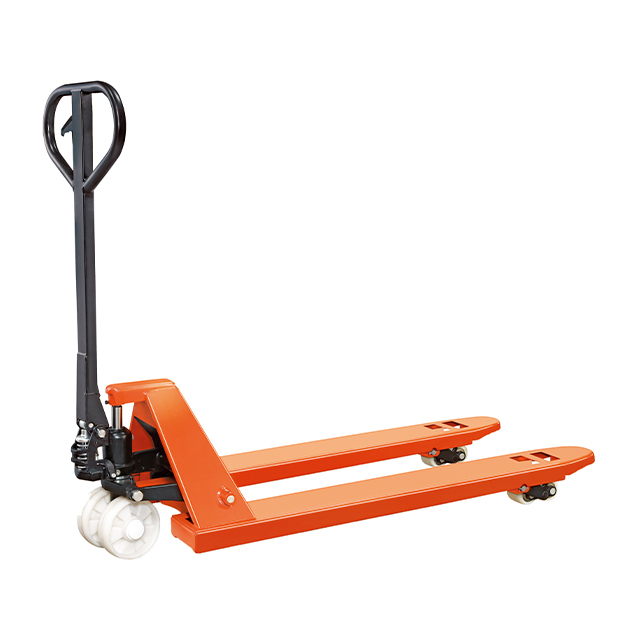
A pallet truck, also known as a pallet jack or pump truck, is a wheeled trolley designed to lift and move palletized goods. These essential pieces of material handling equipment feature two horizontal forks that slide underneath pallets, allowing operators to raise loads slightly off the ground for transportation.
The typical pallet truck consists of several key components:
Forks (or blades): These slide under the pallet to provide support
Wheels: Usually a set of load wheels and steering wheels for maneuverability
Hydraulic pump: Raises and lowers the forks
Handle: Controls steering and, in manual versions, operates the hydraulic pump
Most pallet trucks can handle loads between 2,000 to 5,500 pounds, though capacity varies by model. They're built for short-distance horizontal transport rather than vertical stacking, making them ideal for loading trucks, moving goods between production areas, or organizing warehouse inventory.
Manual pallet trucks rely entirely on human power. An operator pumps the handle repeatedly to activate the hydraulic system, which gradually lifts the forks and pallet. Once raised, the load can be pulled or pushed to its destination.
Budget-friendly: Manual models represent the most economical entry point into material handling equipment. With no electrical components or batteries to maintain, initial costs and ongoing expenses remain low.
Minimal maintenance: The simple mechanical design means fewer parts that can fail. Regular inspection of wheels, seals, and hydraulic fluid typically covers all necessary upkeep.
Versatile operation: These trucks work anywhere without requiring charging stations or power sources. They're equally effective in cold storage facilities, outdoor loading docks, or cramped spaces.
Compact design: Manual pallet trucks typically feature a smaller footprint than their electric counterparts, making them easier to maneuver in tight aisles or crowded work areas.
Manual pallet trucks excel in environments with:
Light to moderate load volumes
Short transport distances (typically under 100 feet)
Smaller facilities or operations
Limited budgets for equipment investment
Occasional material handling needs
For businesses moving fewer than 20 pallets per day or operating in spaces where loads travel short distances, manual pallet trucks deliver excellent value.


Electric pallet trucks, also called powered pallet jacks, use battery-powered motors to handle both lifting and propulsion. Operators walk alongside or ride on the truck, using controls on the handle to manage movement and fork height.
Reduced physical strain: Motors eliminate the need for manual pumping and pulling, significantly decreasing operator fatigue. This becomes especially valuable during long shifts or when moving heavy loads repeatedly.
Increased productivity: Electric models move faster and handle heavier weights than manual versions. Operators can transport more pallets in less time, improving overall throughput.
Enhanced precision: Powered controls offer smoother, more controlled lifting and lowering, reducing the risk of load damage or accidents.
Greater capacity: Many electric pallet trucks handle loads up to 6,600 pounds or more, expanding the range of materials you can move.
Electric pallet trucks require more upfront investment and ongoing attention:
Battery management: Lithium-ion batteries offer fast charging and longer lifespan, while traditional lead-acid batteries cost less initially but require more maintenance
Charging infrastructure: Facilities need dedicated charging stations and protocols to keep equipment operational
Higher purchase price: Electric models typically cost three to five times more than comparable manual units
Maintenance complexity: Motors, batteries, and electronic controls require specialized service
1
The right choice depends on your specific operational requirements. Consider these factors:
Daily volume: Moving more than 30 pallets per day? Electric models help maintain productivity without wearing out your team.
Transport distance: If loads regularly travel more than 150 feet, electric trucks save significant time and effort.
Load weight: Consistently handling pallets over 3,000 pounds becomes much easier with electric assistance.
Available budget: Manual trucks offer immediate cost savings, while electric models deliver long-term efficiency gains that may justify higher initial expense.
Facility layout: Tight spaces with frequent turns favor manual trucks, while large open warehouses benefit from electric speed and capacity.
Operator considerations: Reducing physical demands through electric equipment can improve worker satisfaction and decrease injury risk.
Regardless of whether you choose manual or electric, look for these quality indicators:
Fork length and width: Ensure compatibility with your pallet sizes. Standard forks measure 48 inches long and 27 inches wide, but custom dimensions are available.
Weight capacity: Select a model rated for at least 20% more than your typical loads to provide a safety margin.
Wheel quality: Polyurethane wheels resist wear and roll smoothly, while nylon wheels handle heavier loads but may be noisier.
Handle design: Ergonomic handles reduce strain and improve control. Look for adjustable options that accommodate operators of different heights.
Safety features: Consider models with brakes, load backrests, and horn systems for enhanced workplace safety.
Pallet trucks form the backbone of efficient material handling across countless industries. Manual models provide reliable, economical solutions for lighter applications, while electric versions deliver the power and speed needed for demanding operations.
Understanding your facility's specific requirements—volume, distance, load weight, and budget—guides you toward the right equipment choice. Whether you start with a manual pallet truck or invest in electric technology, selecting quality equipment from established manufacturers ensures reliable performance and longevity.
Ready to explore pallet truck options for your facility? Visit NIULI Machinery to discover a comprehensive range of manual pallet trucks, electric pallet trucks, and material handling solutions designed for professional operations.




 ELECTRIC PALLET TRUCK
  PALLET TRUCK SCALE
  AERIAL WORK PLATFORM
  DRUM TRUCK


