Views: 0 Author: Jamie Publish Time: 2026-03-19 Origin: Site


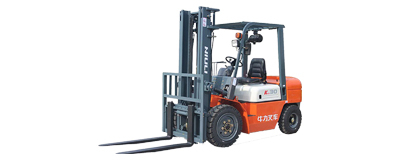
With the surge of energy-related technologies sweeping through industrial sectors, electric forklifts have quickly made an impressionful appearance and their market penetration rate continues to expand rapidly. "How long will it take before fuel-powered forklifts are eliminated from use?" is an ongoing conversation in the industry. Fuel-powered forklifts (powered by diesel, gasoline or LPG) continue to play an integral role in industrial logistics systems worldwide due to their superior performance advantages, adaptability and continuous technological upgrades. They are hard to completely replace quickly and will likely maintain a secure market presence over the longer run. With industry research data from 2025 and practical application scenarios in mind, this article examines why fuel-powered forklifts will remain viable from an industry viewpoint and long-term development trends perspective.
Electric forklifts cannot keep pace with the heavy-load handling needs in industrial settings like ports, mines and steel plants, making electrification replacement extremely challenging. According to the 2025 Fuel-Powered Forklift Industry Research Report, 55% of heavy-duty forklifts above 3 tons were fuel powered and this figure rose further after five tons with its market share remaining above 60% for heavy loads over 5 tons - further justifying fuel power's dominance.
Fuel-powered forklifts feature internal combustion engines with strong and stable power output that are capable of handling ultra-heavy goods exceeding 20 tons without needing to replenish energy midway through their operation. This makes forklifts an efficient option when handling ultra-heavy cargo above 20 tons without interrupting operations to refill reserves midway. Ports and terminals require heavy goods handling daily, with high operation intensity and long duration requirements such as containers and steel products. Fuel-powered forklifts can operate 24/7 to keep full load operations going with only 5-10 minute refills needed to regain full functionality. Even with rapid charging technology, electric forklifts require over 30 minutes to recharge 80% of their power, and under heavy-load conditions the battery lifespan drastically diminishes, failing to meet the high-intensity operational needs of ports. Fuel-powered forklifts also excel at adapting to non-paved road environments, like mines and construction sites, with their sturdy chassis structures and superior passability that allows them to tolerate potholes and dust without becoming severely compromised; in contrast, electric forklifts' battery compartments, motors and components are more susceptible to dust and bumps; consequently their failure rate is much higher compared with that of fuel-powered forklifts.
Because industrial environments can differ significantly, no single power type of forklift can meet all requirements. Fuel-powered forklifts have proven particularly versatile when operating in harsh conditions such as low temperature, high altitude or explosion-proof settings - something a single electric-powered forklift cannot. Fuel powered forklifts have proven invaluable tools for protecting business operations in these circumstances.
At temperatures (below -25), electric forklift lithium batteries suffer significant performance degradation with battery life reduced by over 50% and sometimes failing to start normally. By contrast, fuel-powered forklifts have internal combustion engines which start quickly through preheating without being affected by low temperatures, making them suitable for cold northern regions, cold chain warehousing and other scenarios. Furthermore, in high altitude areas thin air will cause electric forklift motor power output to decline while fuel-powered forklifts can adapt by adjusting engine fuel supply systems which ensure stable power output from their engines compared with their electric counterparts.
Explosion-proof environments like petroleum refining, chemical fertilizer production and other industries present electric forklift batteries with potential safety hazards of leakage and thermal runaway. Explosion-proof fuel-powered forklifts provide an alternative option, thanks to their special sealing and explosionproof designs that prevent fuel leakage or spark generation, thus meeting industry safety standards - these forklifts currently represent the only compliant choice available for such scenarios. According to Ministry of Emergency Management statistics from 2024, about 18 000 internal combustion forklifts with explosion-proof certification exist in China with an average annual growth rate of approximately 6% demonstrating their rigid demand within their niche market segmented markets.

With increasing environmental policies, fuel-powered forklifts have not simply stood still; instead they have undergone green transformation through technological upgrades to break free of their inherent shortcoming of "high emissions and pollution" while further strengthening their market position. As part of the implementation of National IV non-road emission standards, fuel-powered forklift exhaust gas treatment technology has undergone dramatic advancement over recent years. After-treatment systems such as Selective Catalytic Reduction (SCR) and Diesel Particulate Filters (DPFs) have become standard equipment, reducing nitrogen oxide emissions by over 30 % while also virtually eliminating particulate matter emissions to satisfy environmental protection regulations.
Fuel-powered forklift technology continues to develop at an incredible rate, making great strides forward towards energy conservation. Application of high-pressure common rail fuel injection system and 48V mild hybrid system has greatly reduced energy consumption by 15-20%, effectively cutting operating costs. Furthermore, intelligent upgrades have become an emerging trend in fuel-powered forklift development. Popularizing features like remote monitoring, fault diagnosis and preventive maintenance has greatly increased operational and maintenance efficiencies for fuel-powered forklifts while simultaneously decreasing their failure rate significantly. Car manufacturers who introduced intelligent fuel-powered forklifts found that their equipment failure rate decreased by 35% and annual maintenance cost savings reached 120,000 yuan, thus optimizing both efficiency and cost. As hydrogen and LNG technologies develop further, fuel-powered forklifts may evolve even more towards low carbonization and cleaner operation to better comply with environmental policies.
Fuel-powered forklifts offer advantages in purchase, operation and maintenance costs compared with electric forklifts of similar tonnage, thus helping SMEs reduce initial investment pressure significantly. Their purchase cost can be 20%-30% lower for small and medium-sized enterprises below 3 tons than with electric forklifts - thus further lowering initial investment pressure on enterprises.
Fuel-powered forklifts offer simplified operation and maintenance, thanks to their straightforward structure, mature maintenance technology, numerous service outlets in the market and ample supplies of spare parts - thus keeping costs to a minimum while cutting down cycle time significantly. As soon as a problem occurs, they can be quickly repaired and put back into service quickly; unlike electric forklifts which feature complex components like batteries and motors that are difficult to maintain and expensive. Lithium batteries need to be replaced every 3-5 years and their replacement costs can reach several thousands of yuan, so their long-term operation and maintenance cost is much higher than that of fuel-powered forklifts. Fuel-powered forklifts offer convenience when it comes to both fuel supply and charging facilities, making them more suitable for small- and medium-sized enterprises with no permanent locations and inadequate charging conditions, which also makes replacing them harder.
According to statistics, global stock of forklifts stands at approximately 3 million units; when calculated over an 8-10 year update cycle the annual update demand equates to 300k-400,000 units annually - enough for sustained development without market shrinkage in the near term.
Due to increased demand in emerging markets overseas, fuel-powered forklift development opportunities have expanded further. Manufacturing industry and infrastructure construction across Southeast Asia, Africa, and South America is expanding quickly, driving an increased need for forklifts. However, in these regions the power infrastructure is subpar and charging conditions insufficient. With their convenient availability and strong adaptability, fuel-powered forklifts have quickly become the go-to choice in local markets - typically growing by 3-5% annually. China was also the world's top producer of fuel-powered forklifts in 2025; their sales made up 48% of total sales with export volume accounting for an impressive percentage. This growth further cemented China's market position of fuel-powered forklifts.
Electric forklifts have become more prominent in scenarios such as indoor warehousing and light load handling, and this trend will only accelerate further over time. Although electric forklifts will eventually gain market share from fuel-powered versions, this does not imply their extinction altogether; fuel-powered models still serve a crucial function - adapting to different operational situations while meeting specific user demands with ease.
From an industry development trend standpoint, fuel-powered forklifts will continue to target heavy load, special type, and overseas markets in the future. Through technological upgrades, fuel-powered forklifts will achieve low carbon and intelligent transformation to continuously meet diversified industrial production requirements. By 2030, estimates suggest their share in overall forklift market would have remained at approximately 45%; fuel-powered forklifts continue to play an irreplaceable role in industrial logistics systems and thus won't disappear completely; rather they will deepen into segmented fields alongside electric forklifts so as to build more comprehensive and efficient industrial handling systems.