DCQH
NIULI
| Quantity: | |
|---|---|


 PARAMETER TABLE (for Mobile Loading Ramp)
Model | Capacity (kg) | A | B | C | D | E | F | G | H | J | I |
DCQH8T | 8000 | 7000 | 3000 | 1000 | 300 | 10000 | 1800 | 2100 | 1100 | 1600 | 500 |
DCQH10T | 10000 | 8000 | 3000 | 1000 | 300 | 11000 | 1800 | 2100 | 1100 | 1600 | 500 |
DCQH12T | 12000 | 9000 | 3000 | 1000 | 300 | 11000 | 1800 | 2100 | 1100 | 1600 | 500 |
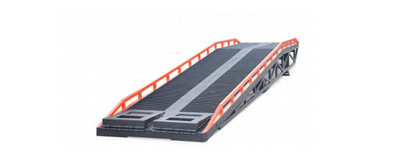
The parameter table includes four models of NIULI mobile loading ramps, with load-bearing capacities ranging from 8000kg to 16000kg. Specifically, the DCQH8T model is 8000kg, DCQH10T is 10000kg, DCQH12T is 12000kg, and DCQH16T is 16000kg, which can meet the loading and unloading needs of different weights of goods.
The core safety configurations mainly include three aspects: first, anti-skid components such as anti-skid steel grids and anti-skid panels to prevent forklifts from slipping during operation; second, safety chains to firmly connect the ramp with the truck compartment and avoid disconnection accidents; third, protective fences to protect the safety of operators and prevent goods from falling. In addition, the equipment adopts a high-strength main frame design to ensure structural stability under heavy load.
The height adjustment of the ramp adopts manual hydraulic mode, which can be operated through the hand pump configured with the equipment, and the operation is simple and convenient. The adjusting support frame is used to assist in fixing the ramp after height adjustment, ensuring that the ramp remains stable during loading and unloading operations and avoiding shaking. The lifting cylinder provides power support for height adjustment, and the imported sealing parts are adopted to ensure the sealing performance of the hydraulic system.
It is mainly designed for forklift loading and unloading operations between trucks and the ground, and is widely applicable to large enterprises, warehouses, stations, docks, warehousing and logistics bases, postal transportation, logistics distribution and other scenarios. It is especially suitable for multi-point operation, temporary loading and unloading and transfer scenarios, and can be used immediately without civil engineering, which is highly flexible. Different load-bearing models can be selected according to the frequency of operation and the weight of goods.
Daily maintenance mainly includes the following points: first, regularly clean the ramp surface to remove dust and oil stains, so as to avoid affecting the anti-skid performance; second, check the tightness of bolts and nuts, and tighten them in time if they are loose; third, regularly add lubricating oil to the moving parts such as bearings and chains to reduce wear; fourth, check the hydraulic oil level and the sealing of hydraulic pipelines, and add hydraulic oil or repair leakage in time; fifth, regularly inspect the safety devices such as safety chains and protective fences to ensure they are in normal use.